What’s on the menu?

Significant changes that are going on in the modern world bother a lot of scientists and geeks. Tristan Harris, like other technophobes, is pessimistic about the influence of new digital technologies on our lives. To test his idea that by shaping a menu, tech designers can manipulate users, I decided to conduct my own simple research.

In the essay “How Technology Hijacks People’s Minds — from a Magician and Google’s Design Ethicist”, Harris puts a spotlight on a set of tools by dint of which tech companies control their clients. The author pays close attention to menus. Modern people encounter these interfaces all the time: when they swipe faces on Tinder, answer emails or search for a bar on Yelp. According to the author, we are vulnerable to menus’ influence as we don’t worry about what is left behind them. Hardly do we ponder a menu provider’s goals. Proceeding on these premises, Harris states that technology “hijacks the way we perceive our choices and replaces them with new ones“.

To my mind, it’s dubious that users deem a set of options provided by various apps, like Yelp or Tinder, as a complete set of available alternatives. Indeed, the use of Yelp doesn’t necessarily mean that we give up the opportunity to walk in a park with friends. It means that we want to hang out at a bar. In other words, we understand what is not included in menus and use only those apps that satisfy our current needs.

 To support this thought, I created a Google form with one question: “What would you ask a genie for if you encountered him?” There were three given variants: two options were supposed to be popular (money and teleportation skill) while another one was less popular (the perpetual summer). Moreover, respondents could come up with their own answer. The poll consisted of one question because I didn’t want to let indolence distort the results of the experiment. Poll participants are likely to ponder questions and give a sincere answer if there are few of them.

According to my hypothesis, respondents should have offered a great number of their own answers which would have disproved people’s negligence toward options behind a menu. More than that, the dominated variant should have been opted for by a smaller number of people as they were supposed to choose options from the menu only when the latter aligned with their own opinion.

Orange, red and blue section correspond to the number of people who have chosen variants from the menu

The form was uploaded on a popular Russian social networking site Vkontakte. 70 random people, mostly students, gave their responses. The results approve my hypothesis: a significant number of respondents have come up with their original answers (39.7%). Many crucial themes, like family’s wellbeing, success and social issues, were touched in their responses. It demonstrates that participants have responsibly approached to the poll. Only few of the rest have opted for the unpopular variant (4.4%). Consequently, we may state that the poll participants have opted for the given variants consciously. Otherwise, they would choose variants randomly, and we wouldn’t see the correlation between the popularity of a variant and the number of responses.

Do digital technologies steal childhood?

Maybe except for stubborn diehards, the majority of people, in particular kids, have plastic (adaptive) minds. As a neuroscientist, Susan Greenfield is concerned about the impact of intense changes in our environment which result from digitalization on an immature mind of a child. Although her claims about this influence made in the book Mind Change may be true for some kids, my personal experience is not at all consistent with her description.

First of all, the scientist puts a spotlight on the tendency for deliberate isolation from the real world in favor of a digital one (24). While some years ago, a bedroom was an equivalent to a lockup for guilty kids, nowadays it’s a place where children maintain connections with distant friends or surf the Internet often being alone. According to Greenfield, such a behavior may result in the loss of vital for social interaction abilities: empathy and communication skills.

Also, the scientist expresses a concern which is familiar to a sea of modern parents: sedentary lifestyle of their children (26). She touches on an important issue. Not only could constant immersion in the digital world affect kids’ minds, but also it’s likely to harm their health. However, the author concedes that the direction of causation may be reverse: due to their indolence, some kids indulge in sitting in front of a screen.

Moreover, Greenfield states that in front of a screen, kids receive produced content, which doesn’t require a lot of intellectual efforts. Therefore, the author deplores the contraction of the amount of time an average kid spends outside. She claims that role-playing games and communication with peers both promote socialization and develop children’s imagination. Indeed, stories and characters come directly from inside a kid’s head when he is performing as a cowboy or playing with toys. Without this crucial experience, according to Greenfield, children hardly can gain creativity and ability to analyze subjects from their own perspectives.

All mentioned concerns determine what Greenfield perceives as the most severe threat both for children and future generations. She states that “life in front of a computer screen is threatening to outcompete real life” (25). According to the scientist, digital technologies provide children with so many opportunities that people’s experience in the world behind screens can become independent of connections into real life.

The neuroscientist seemingly describes my childhood. However, as far as I remember, neither me nor my contemporaries had problems depicted in Mind Change. The digital world didn’t absorb us and it didn’t affect our mental and physical development.

Changes mentioned in her work had begun even before my birth. Ubiquitous technologies like TVs, phones and PCs pervaded our house too. Although I didn’t have a personal TV in my room, the “window to the outer world” was always open when no one used it. But I clearly remember that I preferred to play outside rather than sit in front of the TV. In small towns, like that where I was brought up, the environment encourage play in the open air. When all citizens live in two-storied houses fenced by lofty trees which outnumber the population of a town, they are likely to obtain the unity with nature.

After I reached the school age, I left this quiet and peaceful place because my parents wanted me to study at an advanced school. In those days, I began to intensely use the opportunities provided by social networking sites and telephony. Being far from home (I lived in my granny’s house in Cheboksary), I often chatted with distant friends, parents and other relatives.

Notwithstanding frequent usage of technologies, I spent a lot of time outdoors. Recalling those years, I marvel at the ingenuity of kids living in a stone jungle surrounded by roads and highways. We used to play tag and hide-and-seek running around high-rise buildings or played football with the makeshift gates on one of few fields.

When games ended and I came back home, social networking sites and collective games helped us to remain connected after parting. Even a TV show or a game which were watched or played by me on my own usually pervaded my conversations with classmates, thereby promoting my socialization and analytical skills.

Thus, my childhood didn’t fit the Greenfield’s description. Although I often used a laptop with access to the Internet and sometimes gawked at the screen of a TV, such activities didn’t affect my connection with reality. Conversely, opportunities provided by social networks and telephony enriched my life and augmented the real world. It’s true that we spent less time outside than we could have spent in a world without screens, but the difference was not as hazardous as Greenfield presents. Neither my socialization process, nor the acquisition of analytical skills was affected by the usage of gadgets. However, the fact that tendencies described in Mind change didn’t influence my childhod doesn’t mean the absence of these threats. The verification of Greenfield’s concerns requires rigorous research.

Works cited

Greenfield, Susan. Mind Change. New York: Random house, 2015

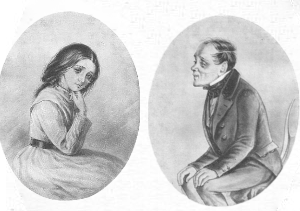
The impact of epistolary communication on social relations

Varvara Dobroselova and Makar Devushkin

In his article “Little Boxes, Glocalization, and Networked Individualism”, Barry Wellman describes how social structures have been evolving following the development of technologies. In particular, the scientist demonstrates how social relations could be influenced by pervasive communication technologies or a lack of them like in the society of “little boxes” characterized by tight connections within each “box” and weak interaction between them. The novel Poor Folk written by Fyodor Dostoevsky depicts the correspondence of the “little boxes” society’s representatives, and therefore provides us with the opportunity to estimate the impact of epistolary communication on their relations.

It’s not so difficult to get a handle on the “little boxes”: just imagine our modern society and then remove all significant inventions made for last two centuries. Mid-nineteenth-century St Petersburg depicted in the Dostoevsky’s novel could serve as an example of the society of “little boxes”. In those days, citizens were transported by cabs or walked. They exchanged information by word of mouth or via letters. Despite a developed postal organization in the city, the majority of people couldn’t afford to use it.

Partly, due to the costliness of the post’s services, the rank-and-file functionary Makar Devushkin moves into a new apartment. The hero needs to settle near the house of the humble seamstress Varvara Dobroselova to maintain epistolary connection with her. In addition to disclosure of the rich inner worlds of the heroes, their correspondence helps readers to evaluate what impact on the social relations epistolary communication has.

The Devushkin’s first letter may tell us a lot about this impact. The letter is replete with compliments (“my angel”, “my beloved one”) and thorough description of emotions (“How happy I was last night—how immeasurably, how impossibly happy!”). These details demonstrate how greatly the character appreciates his connection with Varvara. Hardly can the letter be lumped in with the modern messages where even some words are shortened.

While someone could explain the thoroughness of descriptions by appealing to Makar’s feelings, I tend to believe that the means of communication also has a significant contribution. Indeed, as Makar writes, he has to ask the familiar woman Teresa for delivering letters from Makar’s communal flat to Varvara’s house. Although Teresa is kind and reliable, Makar doesn’t want to take advantage of her goodness and sends letters quite rarely. Therefore, to my mind, he includes as much information as possible.

Another important characteristic of their communication is references to the past letters. Devushkin often mentions facts from received messages throughout his writing (“But how is our good Thedora? …You write that she is now living with you…”). Consequently, he observes the whole picture of Varvara’s life and tries to be its part rather than pointlessly consumes information. To my mind, when people make so many efforts to maintain connection and their messages sincerely and precisely reflect their emotions, letters become a genuine means of interaction.

The way of communication and therefore some aspects of social relations have drastically changed in our modern world of “networked individualism”. This form of social arrangements is characterized, in a nutshell, by unfettered interconnection between single individuals. First and foremost, the maintenance of relationships with any person doesn’t require so monumental efforts nowadays. That’s why, the majority of people email or phone so many individuals that the amount of information they receive and send is colossal. On the other hand, the possession of many connections causes the devaluation of each of them. Indeed, we are not able to pay a lot of attention to every interlocutor.

To sum up, the Dostoevsky’s novel demonstrates that communicating via letters, members of the society of “little boxes” maintained much tighter connections although their number was finite. It’s consistent with the Wellman’s theory according to which “little boxes” made up tight-knit groups. Although modern technologies allow us to create a large number of links, they are less strong than those within a “little box”.

References

Barry Wellman, “Little Boxes, Glocalization, and Networked Individualism”, Berlin, Heidelberg, 2001

Fyodor Dostoevsky, Poor Folk, Translator: C. J. Hogarth;